SDXL Negative Prompts: Complete Guide for ComfyUI (What Actually Works)
notalice
2025-12-21
Negative prompts are an important part of generating images with SDXL. The problem is: a lot of tutorials mistakenly give SD1.5 advice when it comes to negative prompts.
In this tutorial I'll walk you through effective SDXL negative prompting, think positive because it'll be fun!
What is the negative prompt in SDXL?
What the negative prompt is even supposed to be? Ever thought about that?
Everything about prompt can be explained with one word: attention.
Your positive prompt will give attention towards tags.
And as you may know, the negative prompt will push attention away from certain tags.
Here is an example:
Let's say I tell you to think of a house, do that... think of a house.
You thought of a house with either windows, a door, or a roof, right?
Did I mention any of those? No. But it just happens that everytime you think of a house one of these characteristics appear.
Now if I say "think of a house with no doors". The attention will be taken away from doors, although you may end up struggling to imagine a house with no doors.
How to build a good negative prompt
Ring the bells that still can ring Forget your perfect offering There is a crack in everything That's how the light gets in.
― Leonard Cohen
Building a good negative prompt, is about knowing which things you can safely take attention away off.
Best practices when making SDXL negative prompts
For every generation: One or two words from your SDXL's suggested negative prompt is fine
Starting with a base of 1 to 3 words, or even no words, and add them gradually during your generation
For certain situations where you need consistency above all else, keeping a pre-set of style-related negative prompt tags is ok!
Unique negative prompts for your generations
We are humans prompting machines. Less words = easier for us to spot our mistakes.
Using SD1.5 negative prompts or negative prompts made for other models specifically
Having many negative prompt tags for every generation is a bad idea: you are preemptively taking away of things that you didn't even see yet!
Want to understand this in practice? Don't worry, there will be practical steps about how to create your own negative prompt soon.
Let's start with a basic generation, pay attention to the generation below:
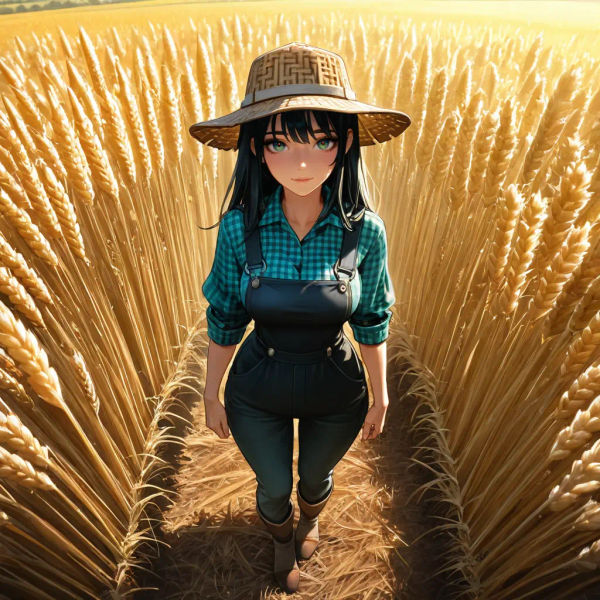
What we notice on this image that we would like to change?
This is quite personal and up to taste, but I don't like that it is very symmetric, the character wears makeup while in the farm and the brightness it too much for me.
The style is also quite default.
What we will do:
- Add
semi realisticandpainterlyto positive prompt, a lot of attention to style right away - General polish to the positive prompt, adding attention to what we want to prioritize. Note: there are some typos on my positive prompt below, which might be hurting my generation, be aware of this on your own generations.
- For the negative prompt: we will add
simple backgroundtaking attention away from images with basic backgrounds,symmetricalto take attention away from symmetrical images, some style tags, andmonochromatic
Now let's check our new result:
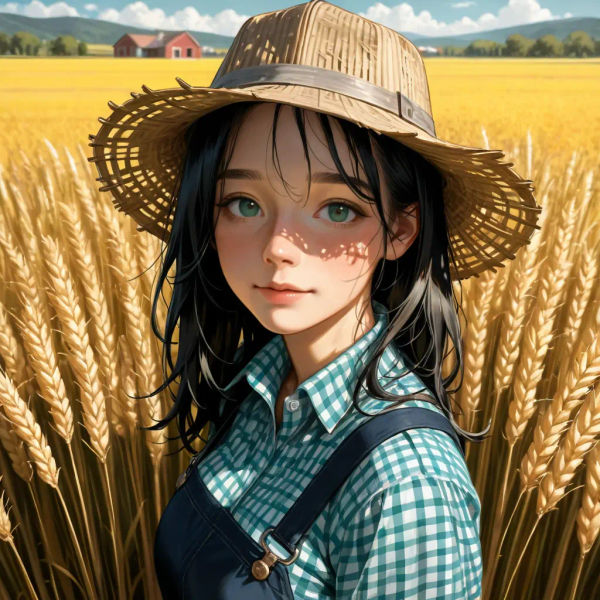
Well this is a guide about negative prompting, so why I added more positive prompt changes than negative?
That's the point! The negative prompt is minimal and we should avoid generic words on it, with exception to style tags.
Now, let's see what happens if I used a negative prompt from the internet instead:
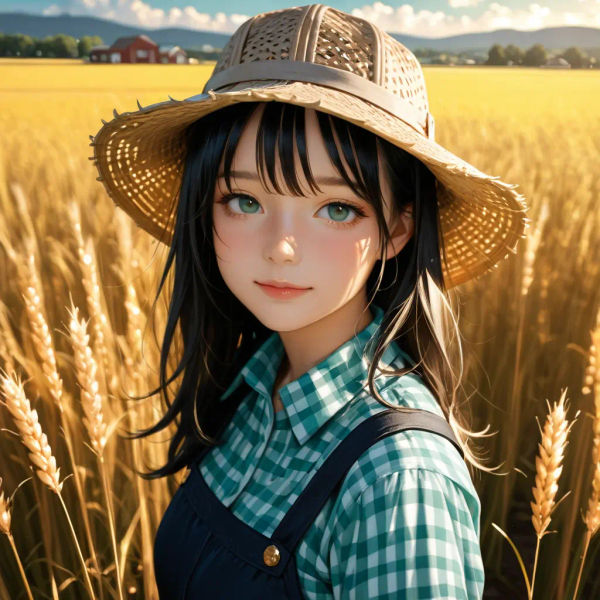
Let's understand what happened here, what the internet negative prompt did versus what my negative prompt did.
The image with less negative prompts:
- Has more attention to the lighting, like the shadows on her face
- Very important detail: Has better anatomy and less symmetry, pay attention to the eyes, the image with a bunch of random negative prompts from the internet has eyes and nose as if she was looking straight-on the viewer, but the head is tilted and some perspective should be present.
- Colors: background colors are more consistent with the picture style
Image with a lot of prompts:
- Face looks glued into the camera
- Eyes are perfect symmetrical
- Single hair strands not present or blurred, even though it was prompted
- Background has a bit of bokeh
- Very realistic background, a bit uncanny
I understand if you think that the image with more negative prompt is better at first glance: studio-like quality at outdoors, unrealistic but a better first glance, same goes for: perfect symmetrical face features that are recognizable right away, polished to uncanny extents, background is completely incompatible with the character style but it looks more appealing at a first glance.
It's alright if even after my explanation you believe that image looks better. For me it looks uncanny, even though my version with negative prompts isn't "perfect" either.
How to create your own negative prompts
Let's get practical.
So, you hit a point of your generation, where you want to add a negative prompt, but why would you want to do that?
- Perhaps you want to avoid characteristics of certain style, like
comic - Maybe something in the generation is bothering you, and you want to take that away
- Your generation is paying too much attention towards realism, or maybe towards some specific trait, and you want to take that away as a whole
- You want to avoid generating non PG-13 images
- You want more complex backgrounds
Are those valid reasons to want a new negative prompt? Yes.
Does that mean we should add a new negative prompt? It depends.
Here are practical guidelines for a new negative prompt:
- Is the feature or whatever we want to remove, present on the positive prompt? Change the positive prompt instead
- Are there words in our positive prompt, infering attention towards what we want to remove? If yes, try changing the positive prompt. (for example: like the house in our analogy inferred door and windows)
- Are we changing the attribute of something? For example, instead of a black car you want a blue car? That can be solved in the positive prompt!
So in short, can we do it in the positive prompt without having to add many positive prompts? Or an overly long positive prompt? Then we should try using the positive prompt first.
Otherwise: add your new negative prompt!
Conclusion
Negative prompts in SDXL are very important, and the rule of less is more is gold.
Try to keep your negative specific to each generation you make, and slowly add what you seem fit.
You like my approach of teaching? Check out for free: Stable Diffusion for Dummies: Free Ebook.